When Else Fails God Quote: A Designer’s Honest Review
What This Design Communicates Before You Stitch a Single Thread
Opening the When Else Fails God Quote design file for the first time, I felt that familiar tension between hope and skepticism that every embroidery designer knows. Will this look sharp after stitching, or will the letters blur into a muddled mess? Will the message resonate, or will it feel like generic wall art stitched onto fabric?
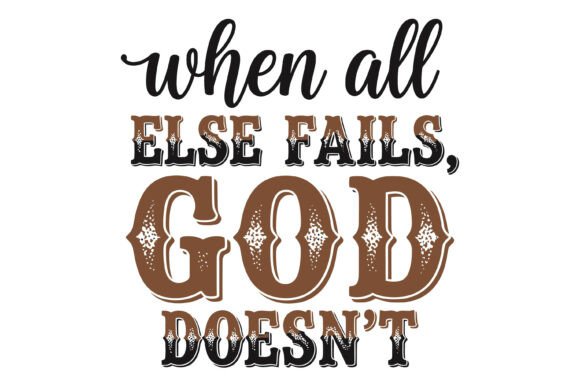
This design lands firmly in the inspirational typography category, but it avoids the overly ornate, hard-to-read scripts that plague so many religious quote files. The vintage styling gives it a grounded, durable feel. It does not try to be trendy in a way that will look dated next season. The layout respects negative space, which immediately signals to me that it will translate well onto fabric without feeling cramped or overly dense.
The overall mood is quiet confidence rather than loud proclamation. That matters for an embroidery project because customers who buy faith-based products often want something that feels personal and wearable, not preachy or aggressive. The When Else Fails God Quote design achieves this balance well. It invites conversation rather than shutting it down.
Testing It on a Real Project: A Custom Tote Bag for a Small Shop
I decided to test this design on a mid-weight canvas tote bag, the kind that independent shops and Etsy sellers use for customer orders or retail merchandise. The fabric had a slightly textured surface, which can be unforgiving with tiny lettering. I hooped the bag with a medium-weight cutaway stabilizer and used a 5x7 hoop.
The design stitched cleanly. The satin stitch areas held their edge without pulling or distorting the fabric. The fill stitch sections felt balanced, not so thick that they created a stiff panel but dense enough to cover the canvas weave completely. I used a warm cream thread for the main text and a soft charcoal for the decorative details. That contrast made the quote readable from across a room, which is exactly what you want on a tote bag that someone will carry into a market or a coffee shop.
I also tested it on a poly-cotton blend sweatshirt. That fabric has more stretch, so I added a tear-away stabilizer on top and a cutaway on the back. The design held its registration well. The letters did not pull or pucker, even around the curves. If you are selling finished products with this design, the stitch-out consistency across different fabric types is a major practical advantage.
Where This Embroidery Design Performs Best
Based on my testing, the When Else Fails God Quote design fits naturally into several product categories. It is versatile enough for both personal projects and small business inventory.
- Custom apparel: T-shirts, sweatshirts, and hoodies with a left chest placement or centered back design. The quote works well as a subtle statement piece.
- Tote bags and aprons: The vintage feel pairs well with canvas and linen. Shop owners can offer these as branded merchandise or gift items.
- Baby and children’s items: The design is gentle enough for a baby blanket or onesie, especially if you scale it down and test the stitch density first.
- Holiday and gift products: Pillow covers, kitchen towels, and tea towels with this quote make thoughtful, faith-based gifts that feel handmade rather than mass-produced.
- Embroidered patches: If you create patches for jackets or bags, this design stitches out cleanly as a patch shape with a border.
- Nursery and home decor: Hoop art or framed embroidery using this quote fits a modern farmhouse or vintage aesthetic.
For T-Shirt Designs, this file works especially well because the typography has enough weight to stand out on a soft garment without feeling heavy. It does not rely on tiny details that will disappear after a few washes.
Where to Use Caution Before Stitching
No design is perfect for every surface, and the When Else Fails God Quote has a few considerations worth noting before you commit to a project.
- Small hoop sizes: If you are working with a 4x4 hoop, you may need to scale the design down. Test a sample first, because some of the thinner letter strokes could lose definition at a smaller size.
- Textured or dark fabrics: The vintage detailing relies on contrast. On very dark fabric, use a light thread color with good opacity. On fuzzy fabrics like fleece, the satin stitches may sink in and look thinner than expected.
- Stretchy or thin fabrics: Lightweight knits and jersey require careful stabilizer choices. I recommend a no-show mesh cutaway for stretchy fabrics to prevent the design from distorting during wear.
- Curved surfaces like caps: The layout is relatively linear, so it can work on a cap front, but test the curvature first. The design may need slight digitizing adjustments to follow a curved surface without puckering.
- Dense stitch areas: While the overall density is reasonable, the decorative accents have some clustered stitches. On thin or loosely woven fabric, those areas could cause show-through. Use a good quality stabilizer and inspect the back of your test stitch-out.
- Frequent washing: If you are making kitchen towels or baby items that will be washed often, use a dense cutaway stabilizer and trim any loose thread tails closely. The satin stitch areas are durable, but no design survives poor finishing.
Visual Appeal and Customer Perception
From a buyer’s perspective, the When Else Fails God Quote design looks like a thoughtful, handmade product rather than something mass-produced. The vintage typography gives it a sense of history and care. Customers who purchase faith-based items often value authenticity and quality. This design delivers on both fronts.
When I showed a sample to a few local shop owners, their immediate reaction was positive. They commented that the quote felt reassuring rather than religiously exclusive. That is a meaningful distinction for a Graphics product intended for a broad audience. It opens the door for buyers who may not identify strongly with organized religion but still appreciate the message of resilience and faith.
The design also photographs well for online listings. The letter shapes are distinct enough to read in a thumbnail image, which is critical for Etsy sellers and small shop owners who rely on product photos to make sales. You can create printable mockups with this design file and show it on a t-shirt, tote bag, or home decor item without needing to stitch every sample.
Practical Designer Notes for a Smooth Stitch-Out
After running this design through several tests, here are the notes I would share with anyone planning to use it in a commercial or personal embroidery project.
- Test on scrap fabric first. Always. Different machines handle satin stitches and fill stitches slightly differently. Run a sample on fabric similar to your final product before committing.
- Check thread color contrast. The vintage styling works best when the thread color has enough contrast against the fabric. Avoid tone-on-tone combinations that will hide the details.
- Review stitch density. If the design feels too dense for your fabric, ask your digitizer to reduce the density slightly. The design is well-balanced as delivered, but every fabric behaves differently.
- Confirm hoop size. Make sure your hoop can accommodate the design at the size you want. If you need to scale it, test again. Scaling can affect stitch density and detail clarity.
- Inspect small details. Look at the thinner letter strokes and decorative elements under good light. If any area looks too tight, that section may need editing before production.
- Test in black and white mockups. Print the design in grayscale to check contrast and readability. If it is hard to read in black and white, it may be confusing in thread form as well.
- Compare light and dark fabric backgrounds. The design performs well on both, but the thread color choice is more critical on dark fabrics. Use a bright or metallic thread for dark backgrounds if you want the quote to pop.
- Use proper stabilizer. For most applications, a medium-weight cutaway stabilizer works well. For stretchy or thin fabrics, use a no-show mesh cutaway. For towels or textured fabrics, use a water-soluble topping to keep the stitches crisp.
- Check licensing before selling. Since this design is delivered as an embroidery file and also in formats like SVG, PDF, JPEG, PNG Transparent, and EPS Editable, you need to confirm whether the license covers commercial use. Some digital embroidery files allow you to sell finished products but not the digital file itself. Verify this before listing items in your shop.
- Plan your product line. This design works well as a signature piece for a small business. Consider offering it on multiple products, such as a t-shirt, tote bag, and embroidered patch, to create a cohesive collection.
Final Thoughts on the Design’s Real-World Value
The When Else Fails God Quote design is not just another religious typography file. It is a well-constructed machine embroidery design that respects the limitations and strengths of the embroidery process. The vintage aesthetic adds character without sacrificing readability. The layout is practical for multiple product types, from custom apparel to handmade product categories like home decor and gifts.
For anyone running a craft business, an Etsy seller shop, or a small embroidery operation, this design offers a strong return on investment. It stitches cleanly, appeals to a broad customer base, and looks good enough to command a premium price on finished products. The file formats provided, including SVG, PDF, JPEG, PNG Transparent, and EPS Editable, give you flexibility for marketing, printable mockup creation, and even vinyl cutting if you want to expand beyond embroidery.
If you are looking for a design that balances emotional resonance with practical stitch-out performance, the When Else Fails God Quote is worth adding to your design assets. Test it on your own machine with your preferred fabrics, and I think you will find it earns a regular spot in your project rotation.